Warding Off Evil in 16th Century Godalming

A Tudor Townhouse in the Historic Heart: 3 Church Street

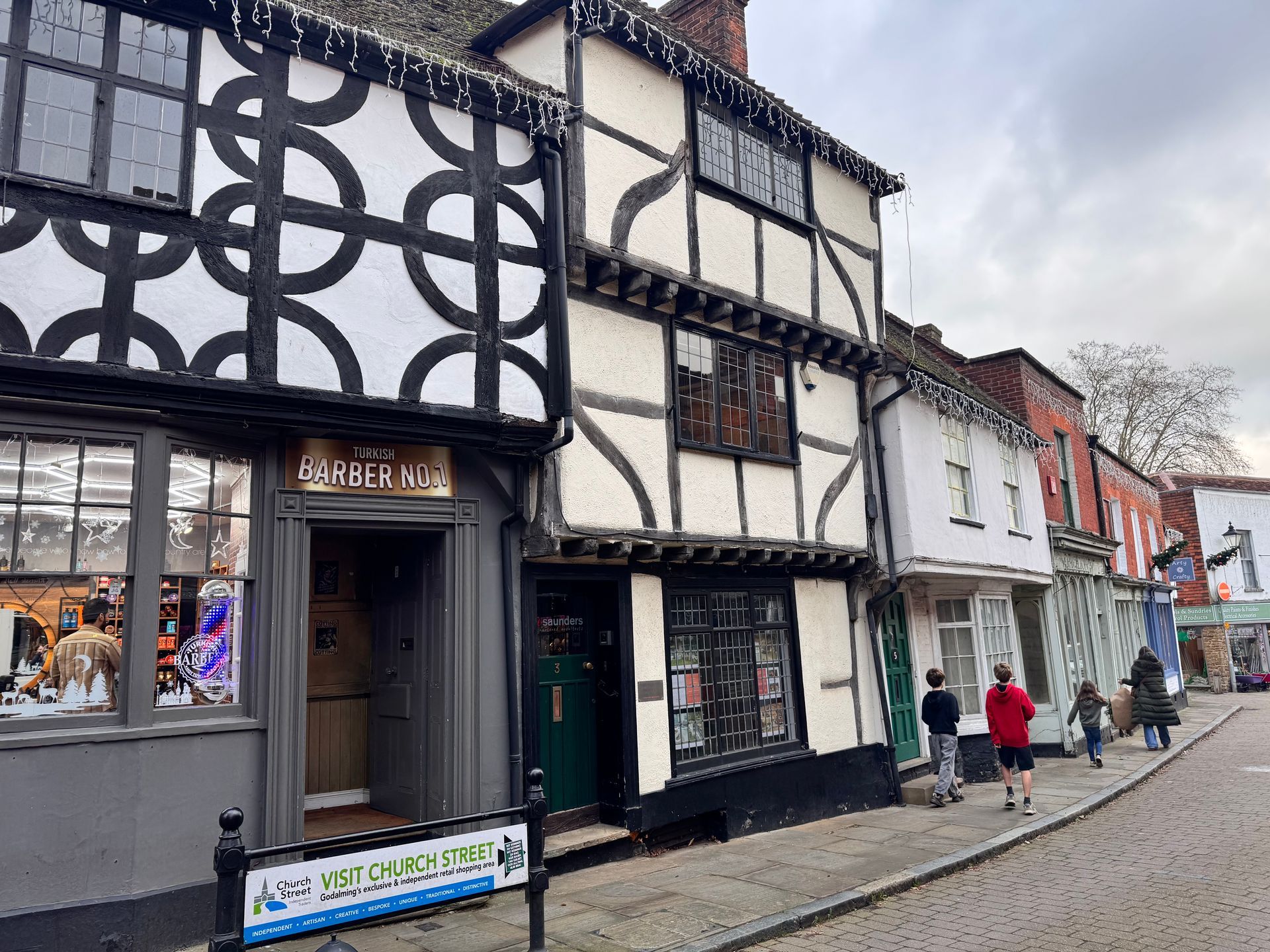
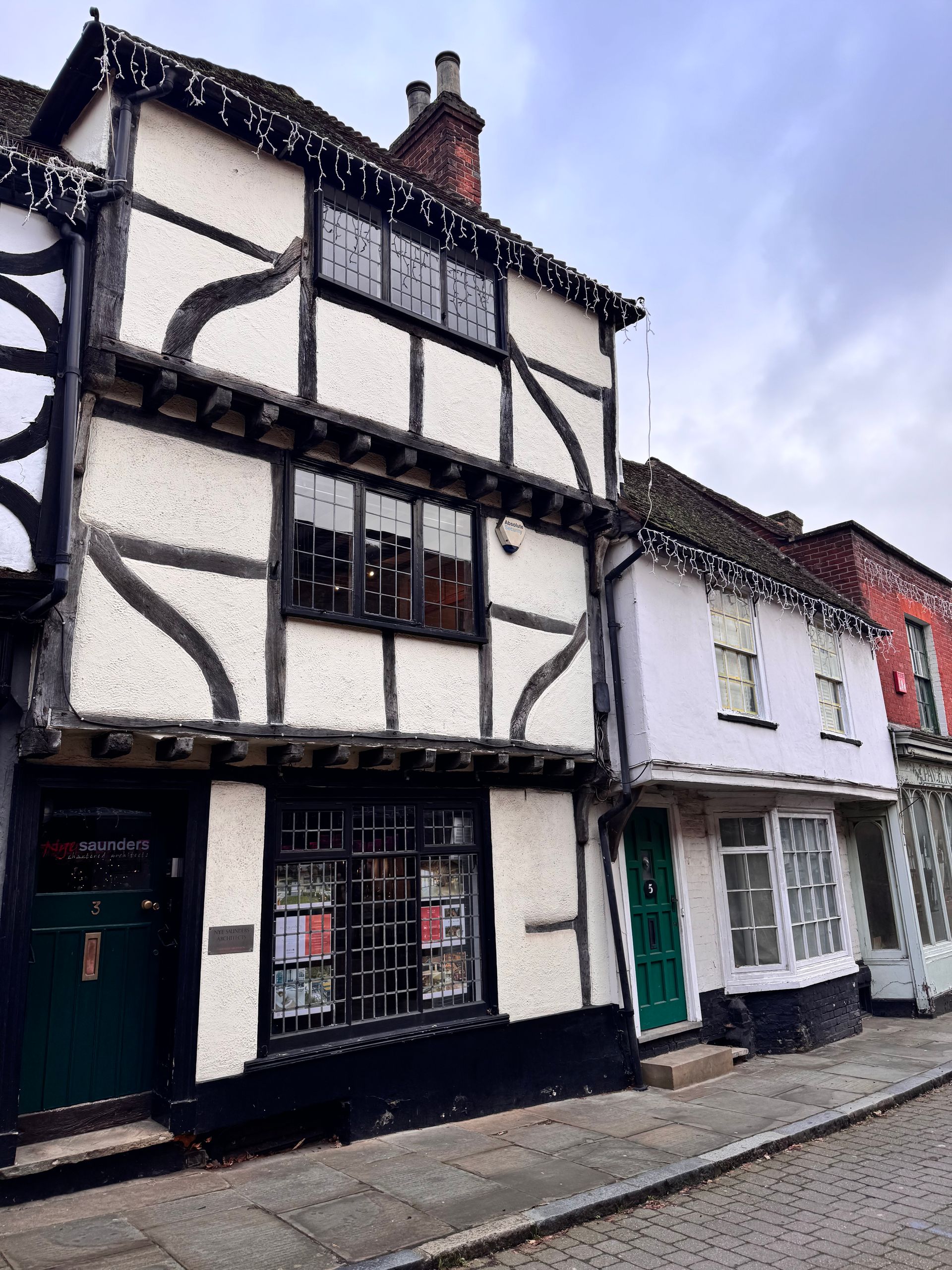
Standing quietly on Church Street, just opposite the iconic Pepperpot, No. 3 Church Street is one of Godalming’s most significant surviving domestic buildings. Modest in width but rich in architectural and social history, it offers a remarkable insight into Tudor town life and the prosperity of a Surrey market town in the 16th century.


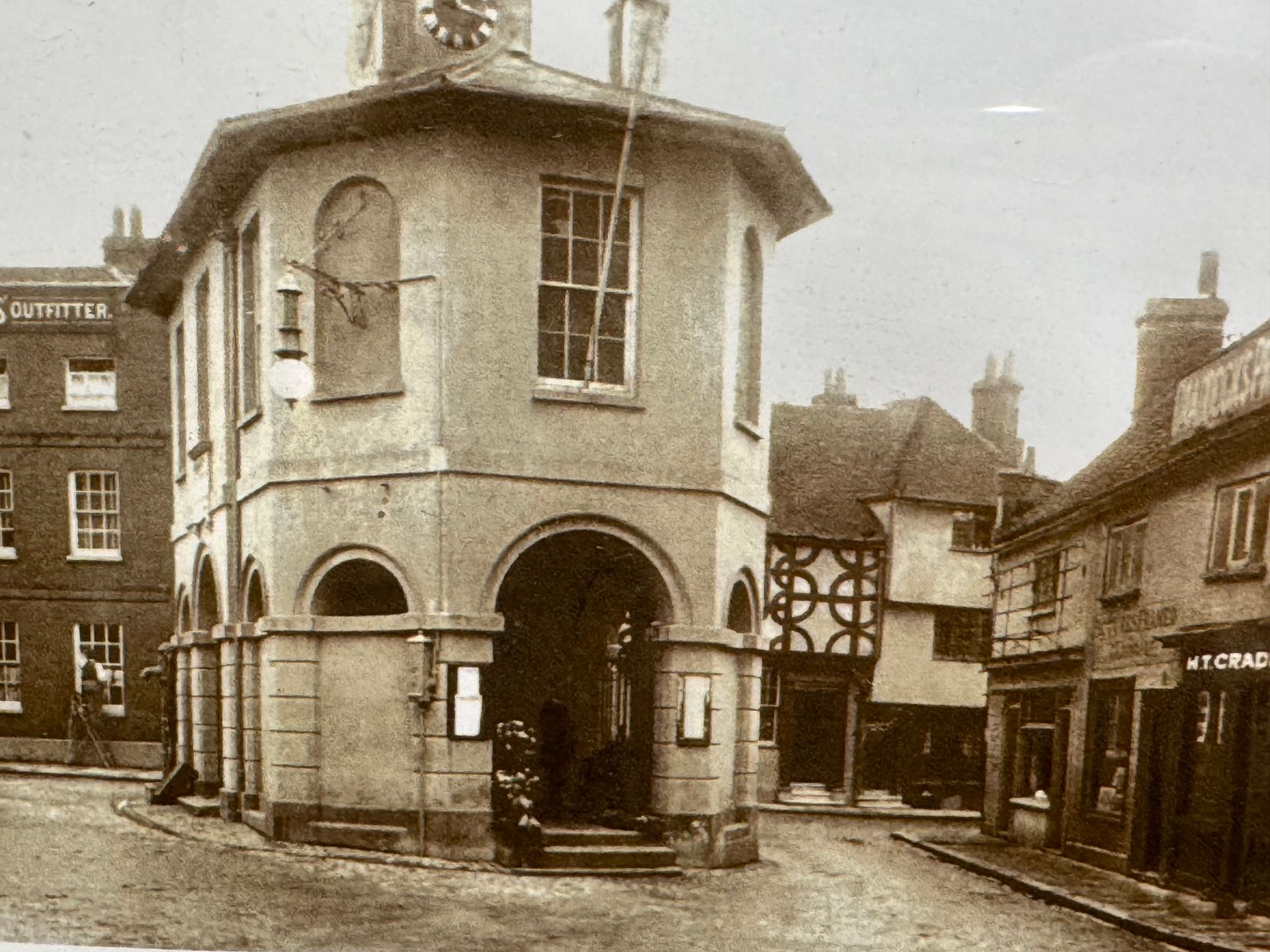
Godalming had a market by 1300, always held on the site now marked by the 19th-century Pepperpot, which replaced an earlier 15th-century market house. This building also served as the Hundred House, where the hundred court was held, making it both a commercial and administrative focus. Its prominent position opposite No. 3 Church Street suggests this part of the town may once have been the very centre of civic life.


During the Tudor period, Godalming’s fortunes were closely tied to the textile trade. The town prospered through cloth production and associated industries. Contemporary accounts at the time of Queen Mary’s charter describe trade as flourishing, and it was during this period of confidence and wealth that many of the fine buildings along Church Street and the High Street were constructed, several of which survive today.
A House Dated to the Last Year of Queen Mary's Reign


No. 3 Church Street was built in 1557, the final year of Queen Mary Tudor’s reign. This precise date was established through dendrochronological analysis carried out by the Surrey Archaeological Society in November 2006. The building is therefore over 460 years old, making it one of the earliest surviving townhouses in Godalming.


The house is a traditional three-bay, narrow oak-framed townhouse, rising to three storeys with a brick cellar beneath. The design reflects the value of street frontage in a busy Tudor town, building upwards rather than outwards. The building was clearly built by or for a relatively wealthy merchant or shopkeeper. It is likely that the front ground floor of the shop would have opened up onto the street front, with a kitchen at the rear. Family living accommodation would have been on the first and second floors, probably with children, or maybe even a servant in the attic space.


Architectural Character & Craftsmanship

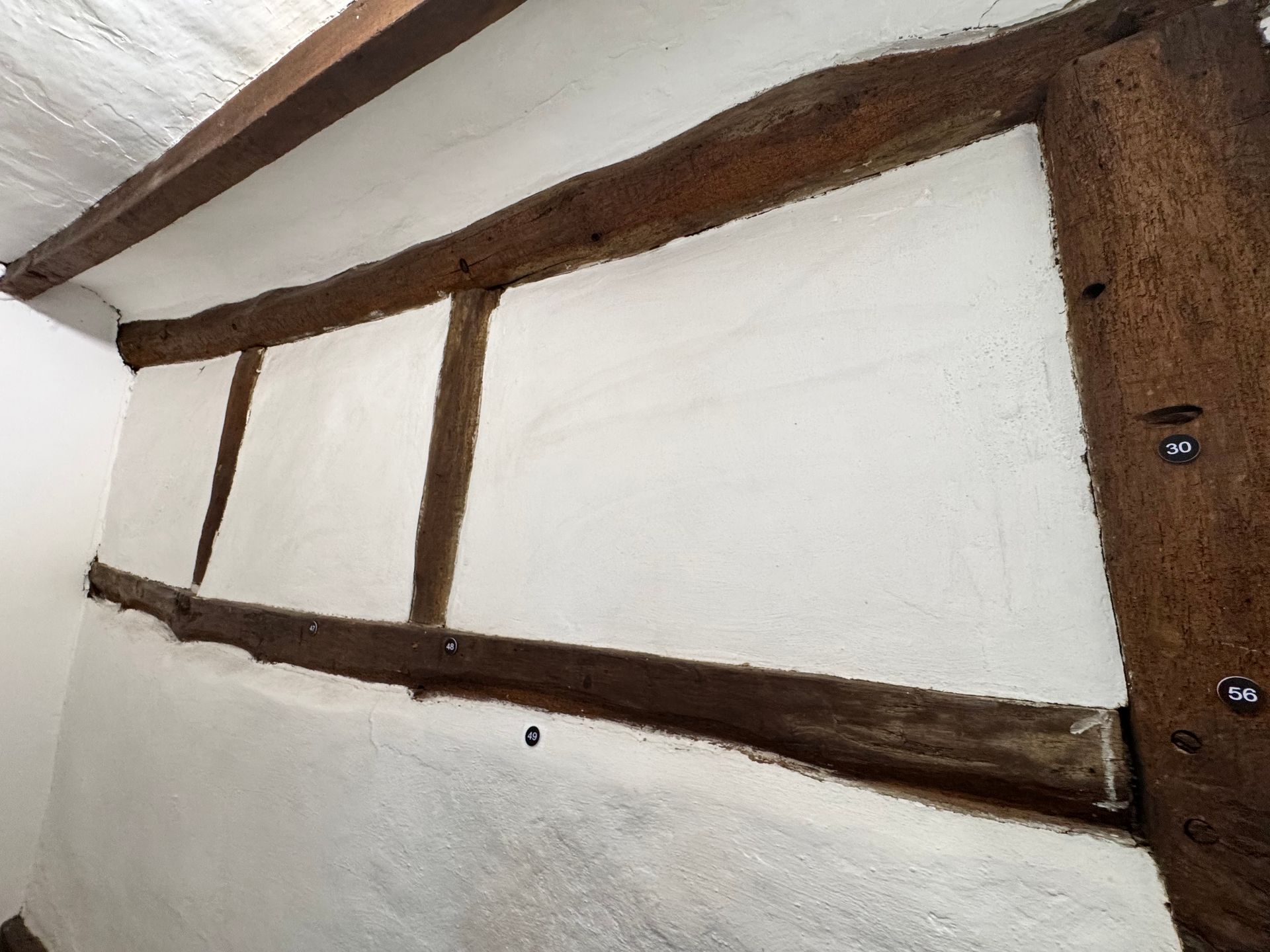
The two upper floors are jettied over the street, a distinctive Tudor feature that increased internal space while maintaining a compact footprint at ground level. The exposed oak framing creates large square panels, originally infilled with wattle and daub and finished externally with limewash. Although the building was plaster-rendered historically, to protect the wood, this was removed at a later date, leaving the timber frame visible today.


Decorative ogee-shaped curved braces on the street elevation add refinement and visual interest, a sign that this was a well-appointed home rather than a purely functional dwelling. The roof features large curved queen struts, principal rafters, side purlins and wide wind braces, all hallmarks of high-quality Tudor carpentry.


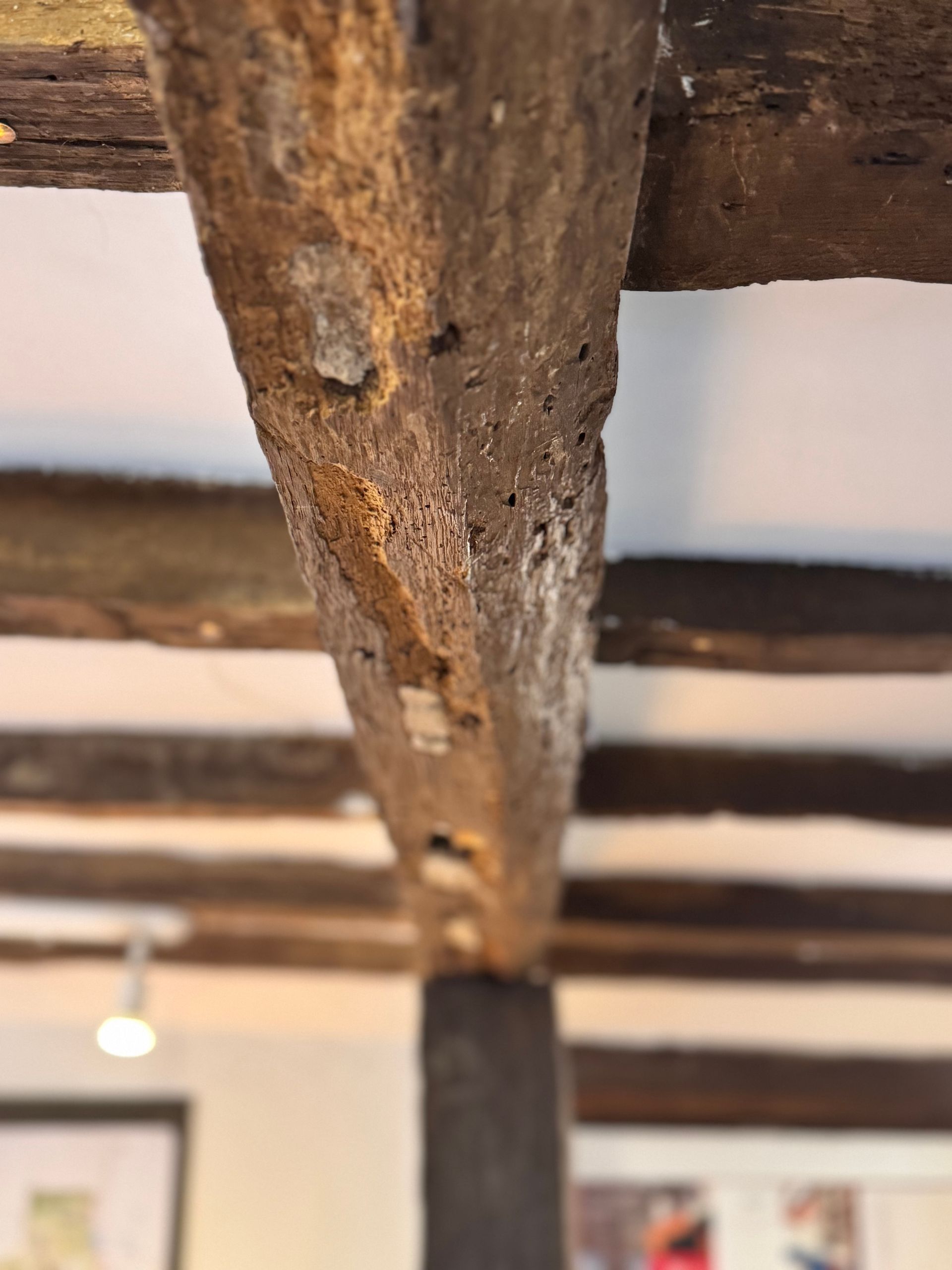
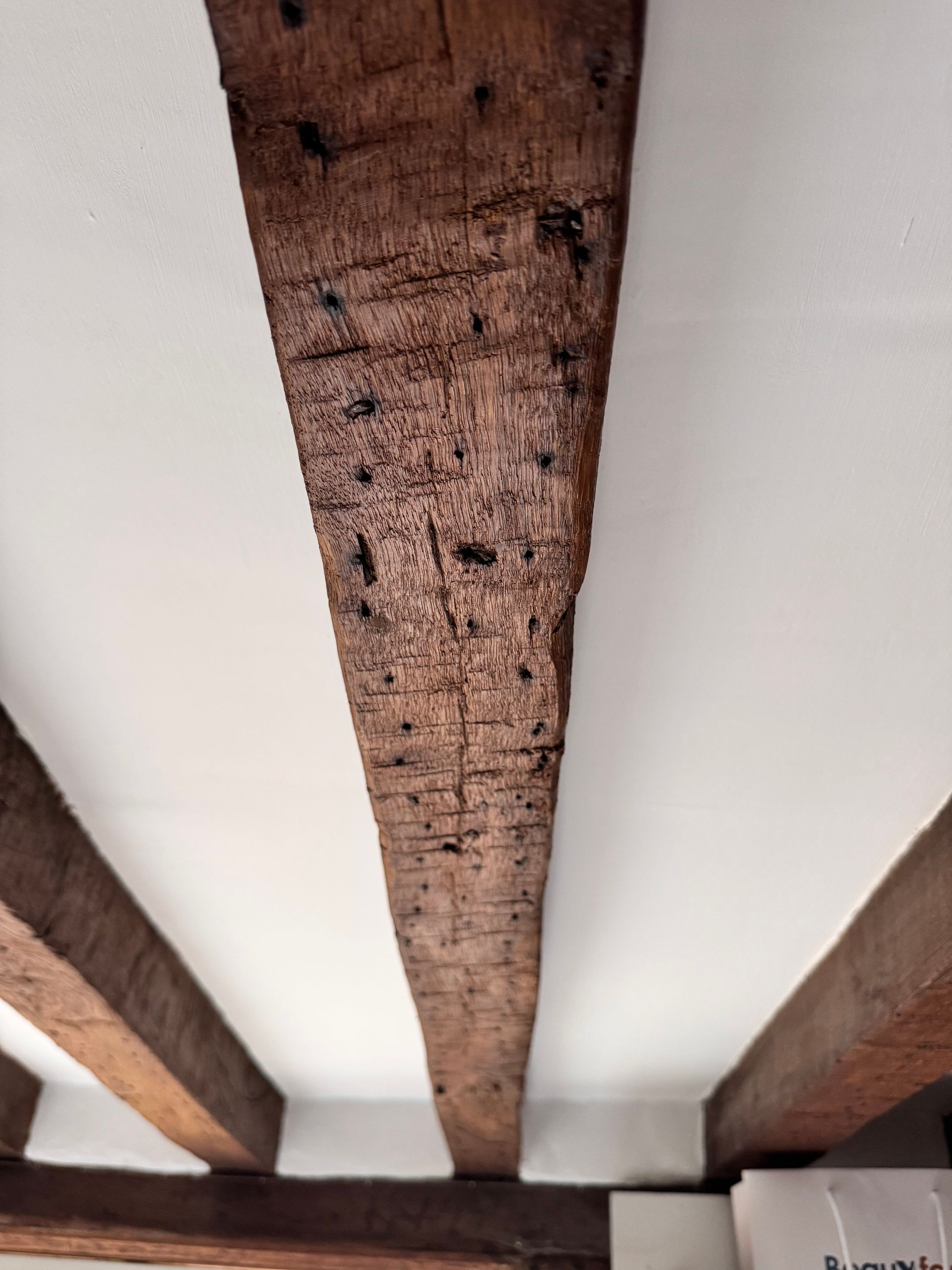
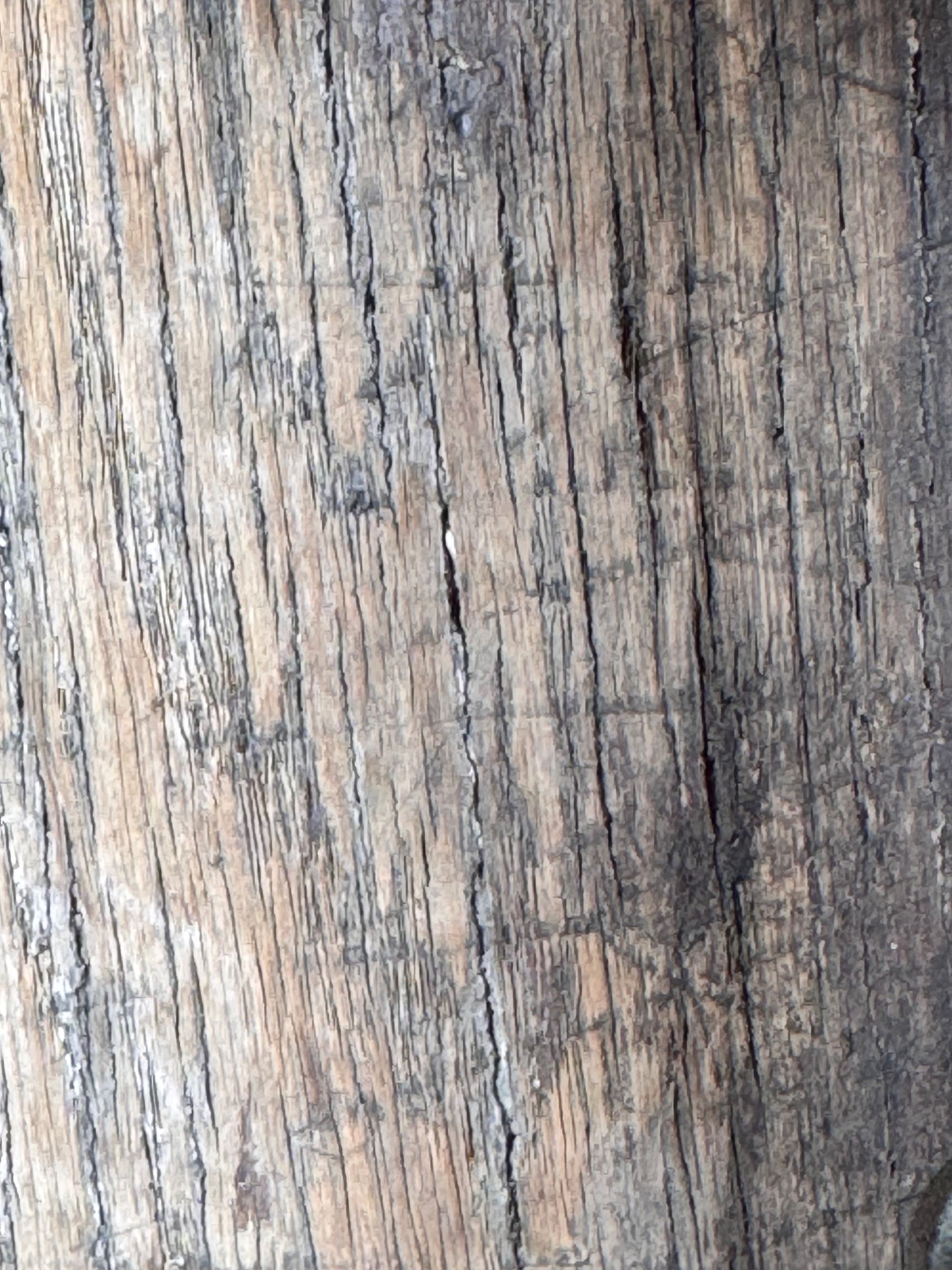
Throughout the building, the quality of craftsmanship is evident. Diagonal down-braces connect main posts to side rails and cross beams on every floor, while the timbers themselves retain clear evidence of pit sawing and axe hewing, where the oak was squared directly from the tree.

Early Chimneys & Internal Layout

One of the most remarkable features of No. 3 Church Street is its two brick chimney stacks, which appear to have been constructed at the same time as the timber frame. These chimneys served fireplaces in both the front and rear rooms on all floors. According to the Surrey Archaeological Society, this is the earliest house in the county so far identified as having chimneys built as part of the original structure, a significant architectural milestone.


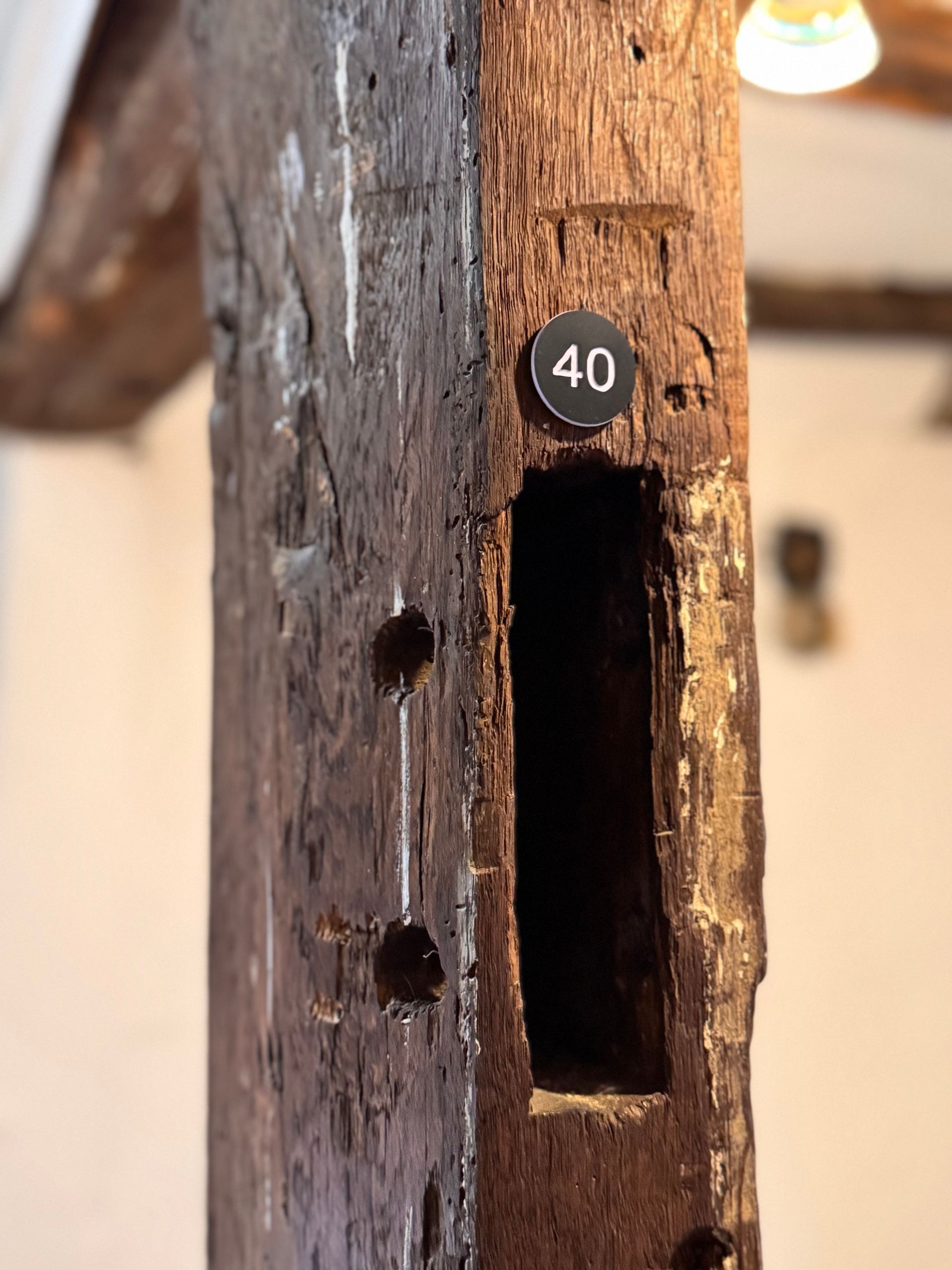
Inside, the building reveals much about Tudor domestic life. On the ground floor, diamond-shaped mortices beneath a side beam mark the position of an original rear window. This would likely have been unglazed, closed instead with a hinged or sliding internal shutter.


On the upper floors, mortices in the undersides of cross beams indicate the original timber partitions between rooms. Carpenter’s assembly marks remain visible on posts and joists, along with hinge fixings for doors, intimate details that bring the building’s construction process vividly to life.


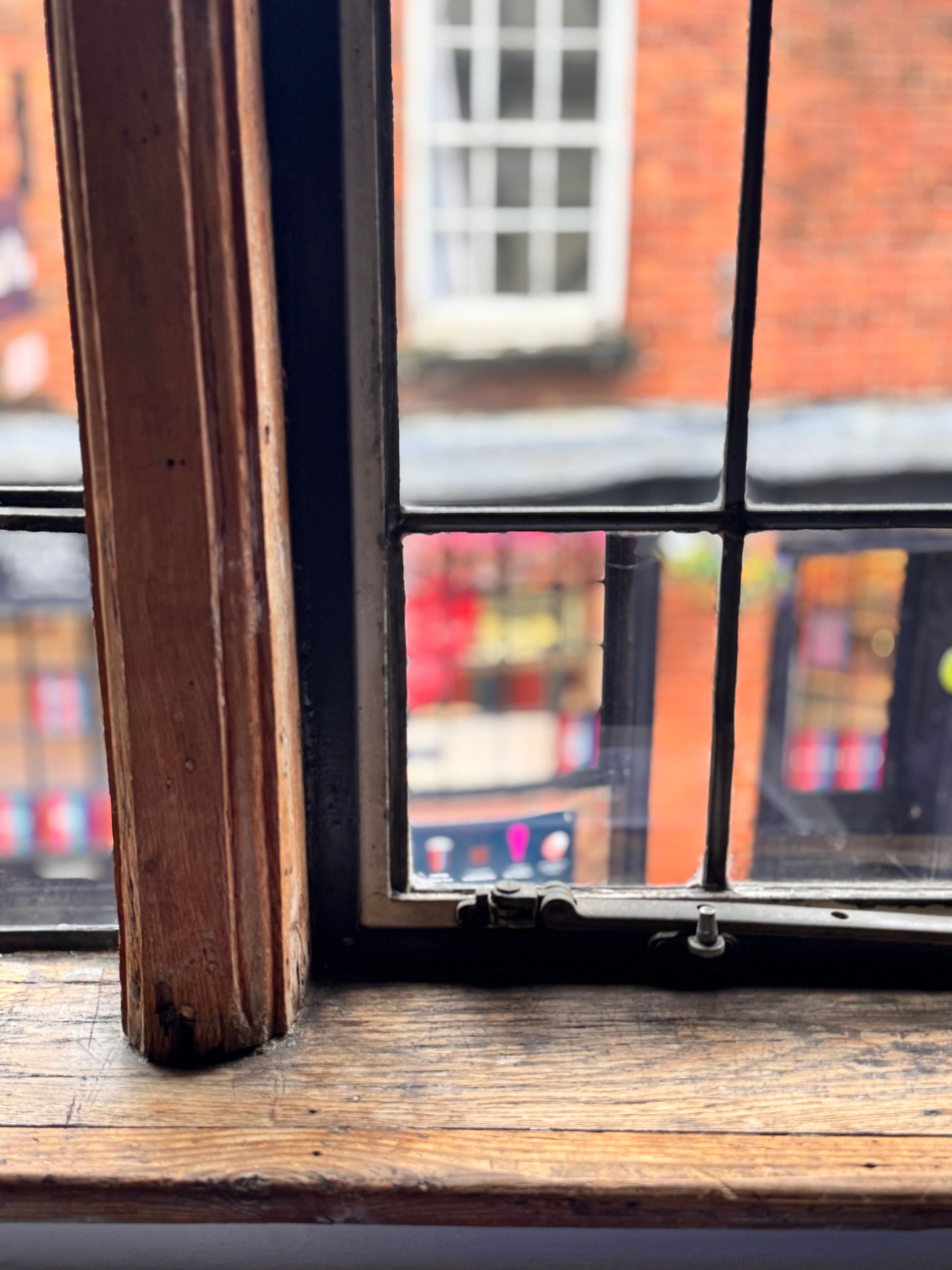
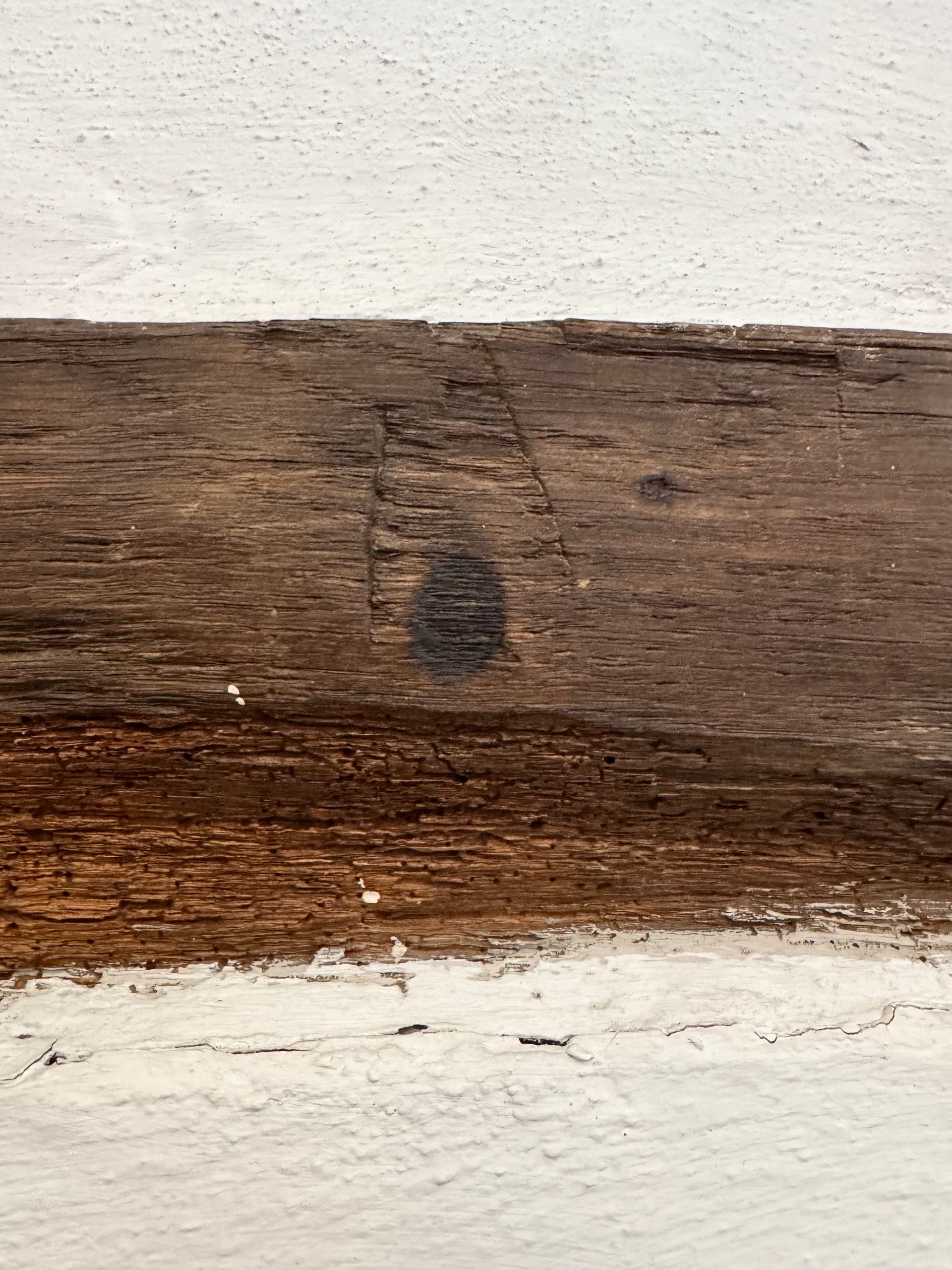
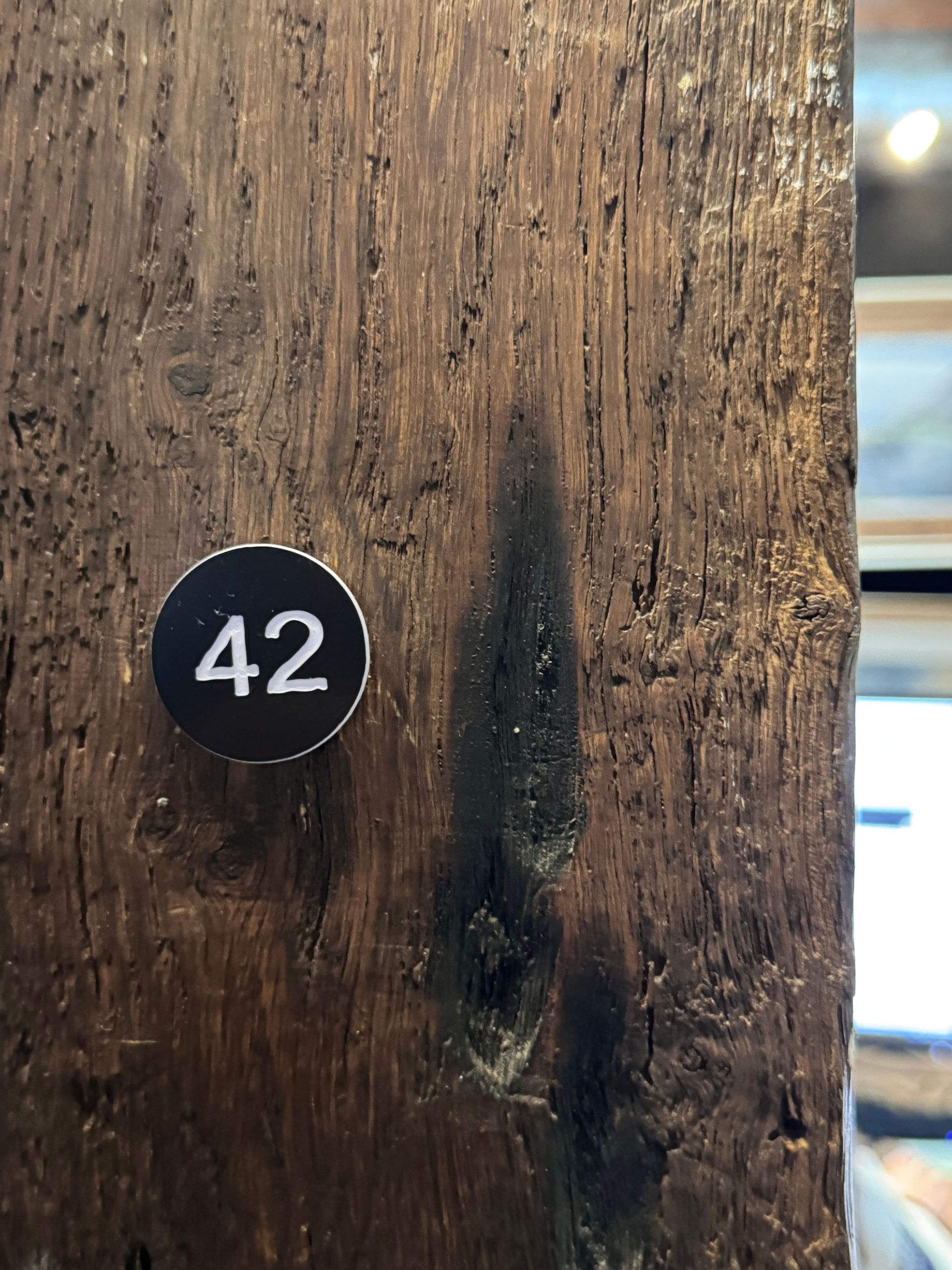
The building also bears intriguing evidence of apotropaic marks, symbols intended to ward off evil. These include multiple interlinked “VV” or “VW” scratch marks cut into the window board of one window, along with numerous scorch marks on timbers beside doors and windows. For many years, these burn marks were assumed to be the accidental result of using rushlights or taper reeds for illumination. However, recent research archaeological consultancy Triskele Heritage has challenged this interpretation.


Their work suggests that the marks’ deliberate placement, often in draughty and impractical locations for lighting, indicates they were intentionally created as protective symbols, designed to guard vulnerable openings in the building against malign or evil spirits.  


Life in Church Street

By the early 20th century, No. 3 Church Street continued to function as a family home. The 1911 census records Thomas Russell Borer, a widowed auctioneer’s clerk, aged 72, living there with his daughter Lilian and six-year-old grandson, Archibald Robert Pamment. The house contained seven rooms, and Lilian Borer remained there until at least 1939.


Next door, No. 5 Church Street, known in 1921 as Temperance House, Gwendoline Emily Jane Marshall, a self-employed confectioner, lived alone and ran a business providing luncheons and teas, notably without alcohol, offering a glimpse into the quieter, respectable commercial life of the street in the early 20th century, despite the road containing several public houses including The Cornmeter (closed 1956), The Star (still open), and The Skinners Arms (closed 1957).


No. 3 Church Street is Grade II listed, recognised as a late 16th-century or early 17th-century building of special interest. Its double-jettied façade, exposed oak frame and decorative detailing make it not just an architectural treasure, but a tangible link to Godalming’s Tudor prosperity and evolving town life.


For anyone interested in historic buildings, craftsmanship or the layered stories of Surrey’s market towns, this modest yet extraordinary building, is a reminder that some of the most important heritage assets are found not in grand estates, but woven quietly into the everyday streetscape.


Today, No.3 Church Street is home to award-winning chartered architects Nye Saunders.


  • Slide title

    3 Church Street

    Button
  • Slide title

    Apotropaic marks, symbols intended to ward off evil

    Button
  • Slide title

    Apotropaic marks, symbols intended to ward off evil 

    Button
  • Slide title

    Old window, possible closed when the house next door was built

    Button
  • Slide title

    Apotropaic marks, symbols intended to ward off evil

    Button
  • Slide title

    Evidence of location of old door 

    Button
  • Slide title

    Beams with character & evidence of workmanship

    Button
  • Slide title

    1903 with 3 Church Street behind the Pepperpot, when it was rendered.

    Button

What is a Hundred?

A Hundred was an early administrative division used in England from the medieval period. Each county was divided into Hundreds, which were responsible for local justice, taxation and order.


Every Hundred had a hundred court, where matters such as land disputes, minor offences and local governance were dealt with. These courts usually met in a prominent public building known as a Hundred House, often positioned beside the market place.


The name Hundred may refer to an area able to supply one hundred fighting men, or to a district made up of one hundred hides of land, enough to support one hundred households.


In Godalming, the building later known as the Pepperpot replaced an earlier market house and served as the Hundred House, marking this spot as the historic civic heart of the town. Its position opposite 3 Church Street reinforces the importance of this part of Church Street during the Tudor period, and demonstrates how towns like Godalming developed their street patterns and hierarchy.


Want to Know About the History of your Building?

Drop us a line to tell us about your building. We love investigating how buildings developed and who lived in them. These stories help to not only connect us to the past, but understand the relevance of structures so we can design for the future.

Send an email Find out more
Killerton House exterior
By Helen McClure February 20, 2026
A "temporary" 1778 house that became a family legacy. Discover Killerton's story, radical inheritence and why it remains one of Devon's most captivating houses.
Wallpaper designs
By Helen McClure February 18, 2026
Uncover wallpaper’s rich history from ancient art to Victorian poison, revealing how wallcoverings shaped style, culture & interiors through the ages.
Craved marble and beautiful craftsmanship
By Helen McClure February 2, 2026
Insights on why understanding and respecting heritage properties leads to informed, sensitive interior design that honours history and improves outcomes.
Marie Antoinette surrounded herself with Toile de Jouy fabric
By Helen McClure January 21, 2026
A visit to the Marie Antionette Style exhibition at the Victoria and Albert Museum in London shows that fashion and interiors are not separate worlds
By Helen McClure December 16, 2025
History at Home a research service, which investigates the history of your house and its setting. It informs your interior design and architectural decisions.
Rear view of Norney Grange
By Helen McClure December 16, 2025
Norney Grange, near Godalming in Surrey, demonstrates simple beauty, stunning craftsmanship and a comfortable environment, which is easy to live and work in.
Picture of History at Home research
By Helen McClure December 9, 2025
Here's how historical research into your home can help create interiors with a real connection.
By Helen McClure November 20, 2025
Create a cosy, sustainable Christmas with natural decorations and colour psychology. Discover ideas for foraging, crafting and styling your festive home beautifully.
By Helen McClure November 6, 2025
Marrying Arts and Crafts design with Art Deco glamour
Castle Drogo in Devon. The last castle built in England
By Helen McClure November 3, 2025
How do heritage homes help modern interior designers? This article looks at Castle Drogo in Devon, designed by Edwin Lutyens.