Why living in a heritage home is the best form of conservation
A house built from the past
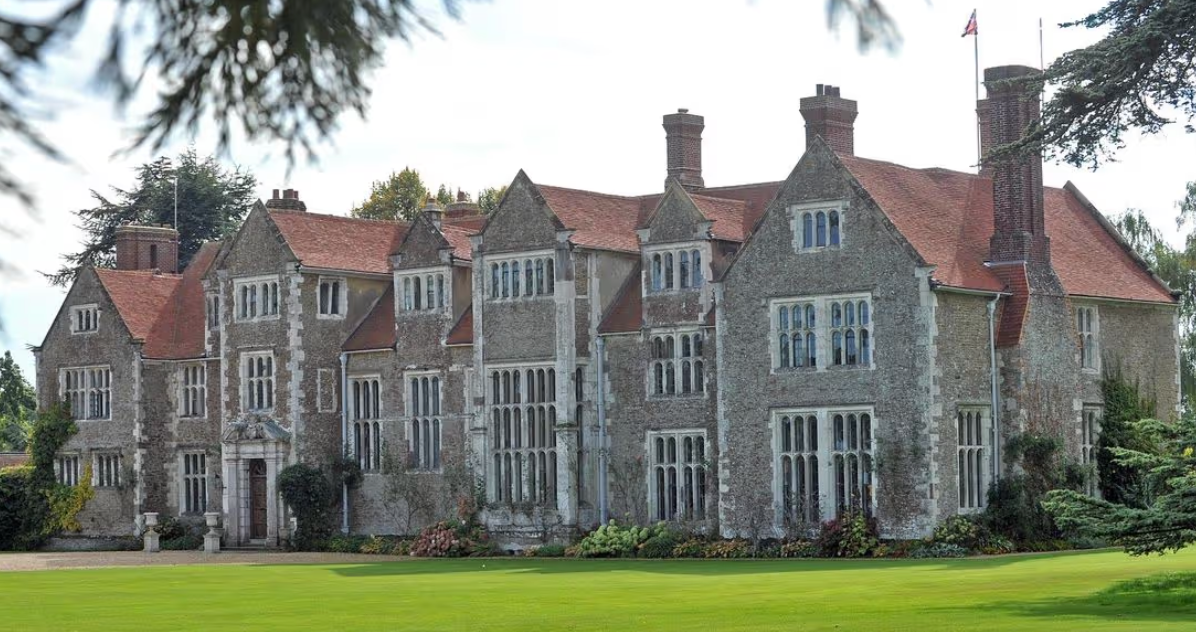
The honey-coloured stone that gives Loseley its distinctive character is Bargate stone, a durable local sandstone that was once widely used in the architecture of Godalming and the surrounding area. Today, repairing buildings constructed from this material presents a particular challenge because the stone is no longer quarried.
Even in the sixteenth century, however, sourcing sufficient stone for a substantial country house was not straightforward. The local quarries could not provide everything required for Loseley, so some of its stone was salvaged from the ruins of Waverley Abbey, dissolved during Henry VIII’s suppression of the monasteries.
In other words, parts of Loseley were built using materials that already had a history of their own. What might now be described as recycling or architectural salvage was once a practical way of obtaining valuable building materials. The result is a house whose story extends beyond its own construction to the medieval religious landscape that preceded it.
This is a useful reminder that historic buildings are rarely isolated objects. They are part of a wider architectural and cultural history, often containing traces of buildings and traditions that have long since disappeared.
Architectural salvage giving history another life
Change is part of a building's history
Although Loseley was built in the sixteenth century, not every feature dates from its original construction. Many of its principal rooms contain impressive Jacobean fireplaces carved from chalk, introduced during the seventeenth century.
These fireplaces are a reminder that even a house of considerable historical importance has evolved. Its interiors reflect changing fashions, craftsmanship and expectations of comfort rather than a single, unchanging moment in architectural history.
This is where sensitive interior design becomes particularly important. It is tempting to assume that a period property should be returned to the date of its construction, stripping away anything that came later. But doing so can erase just as much history as an insensitive modern renovation.
A seventeenth-century fireplace in a sixteenth-century house is not necessarily an intrusion. It is evidence of the building’s continued use and changing fortunes. The challenge is to understand which elements matter, how they relate to one another and where thoughtful adaptation can enhance the whole.
The everyday business of conservation
At Loseley, conservation is not confined to grand architectural features. It is also reflected in the everyday care of the house and its contents.
The continuity of family ownership has helped preserve heirloom furniture and furnishings. Keeping a historic building warm and managing moisture are important considerations in protecting its fabric, while rugs can help shield waxed wooden floors from wear. Original stone flags survive in the old kitchen, and encaustic clay tiles line the passage once used by the scullery maids.
Each material requires a different approach to maintenance. Stone may need careful cleaning and appropriate sealing; historic timber benefits from an understanding of its finish and condition; and traditional tiles need to be assessed before any treatment is applied.
Even the encaustic tiles raise an interesting historical question. The use of encaustic tiles in Britain dates back to the medieval period, particularly in ecclesiastical and royal buildings. Production declined following the Dissolution of the Monasteries, before the craft was revived during the Gothic Revival of the nineteenth century. The tiles at Loseley may not be original to the house, but they belong to a much longer tradition of British craftsmanship.
This is one of the pleasures of exploring a historic interior: the smallest details can reveal unexpected connections to social history, changing technologies and the lives of those who worked behind the scenes.
Conservation is not about turning back the clock
Perhaps the most important lesson from Loseley House is that conservation need not mean returning a building to a supposedly perfect original state.
A house that has evolved gradually over centuries carries the evidence of that evolution in its materials, furnishings and architecture. Removing every later alteration risks creating an artificial version of the past, rather than preserving the character that makes the building distinctive.
For owners of period properties, this presents an important question: how do we make an old house work for modern life without compromising what makes it special?
The answer begins with understanding the building. Which features are historically significant? Which materials are original, and which were introduced later? How have previous owners adapted the rooms? What needs to change for the house to remain comfortable, practical and enjoyable?
Only then can decisions about layout, lighting, colour, furnishings and finishes be made with confidence. The aim is not to make a historic house look as though nobody has touched it for 400 years. It is to ensure that new interventions sit comfortably alongside the old, respecting the building’s character while allowing it to meet contemporary needs.
Keeping heritage alive
Loseley House demonstrates that conservation is as much about continuity as it is about preservation. Its history survives not simply because its stone walls and historic interiors have been protected, but because successive generations have continued to occupy, maintain and adapt the building.
A house that cannot be lived in risks becoming an increasingly fragile and costly relic. A house that remains useful has a reason to be cared for, repaired and passed on.
For me, this is the essence of thoughtful heritage design. We are not simply decorating rooms or recreating historical styles. We are helping buildings continue their stories, finding ways to accommodate modern life without losing the details, materials and atmosphere that make them unique.
The most successful conservation allows a historic home to remain what it has always been: a place to live, to gather, to adapt and to make memories. Its future is not separate from its past. It is the next chapter.
Is your period home ready for its next chapter?
Living in a heritage property means balancing the character of the past with the practicalities of modern life. At At Home by Design, we specialise in creating thoughtful, timeless interiors that respect a home’s history while making it work beautifully for today.
Discover how we can help you bring out the best in your period property.