A Tour of Prior's Field School, Godalming
Originally called
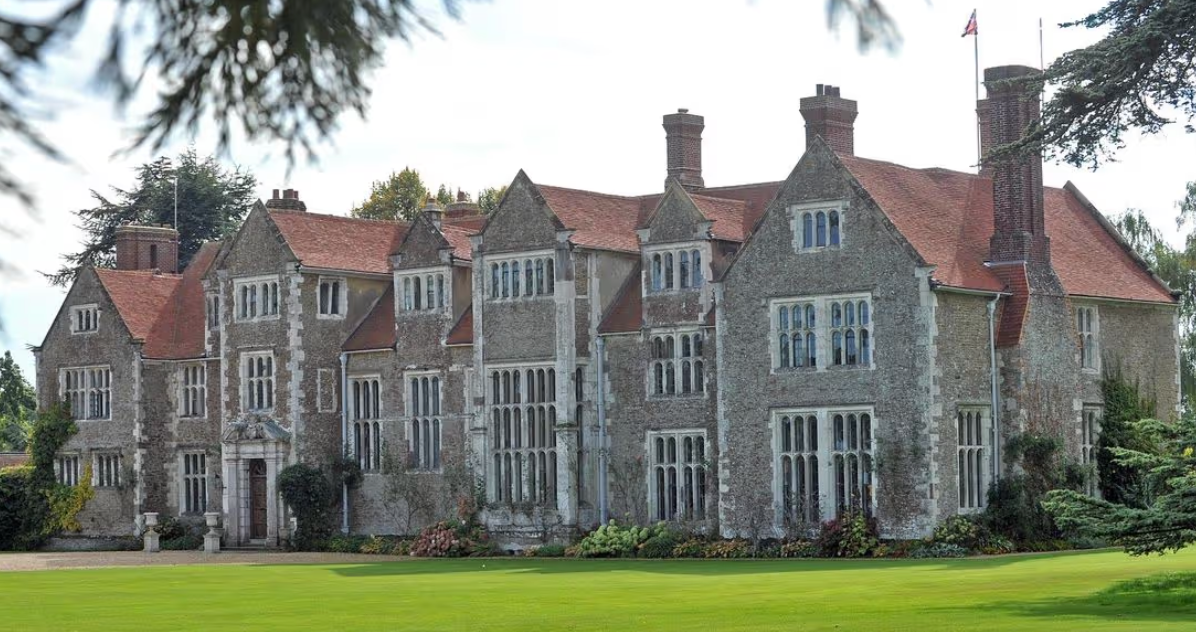
Prior’s Garth, the house was designed in 1900 by Arts and Crafts architect CFA Voysey for Frank Harding Chambers, a master at Charterhouse. Before it was completed, Chambers moved away and sold the property to Leonard Huxley, also a Charterhouse master.
From 1901, his wife, Julia Huxley, transformed it into a progressive girls’ school. Her vision was quietly radical: an education rooted not just in discipline, but in culture, curiosity and a genuine love of learning. These
liberal ideals,
influenced by the Arts & Crafts movement, put an emphasis on
creativity, individuality and moral development, and
rejected rigid, traditional Victorian schooling. The school’s enduring principles,
admiration, hope and love, were drawn from Wordsworth’s
The Excursion, and still underpin its ethos today.
A House Never Meant to be a School
Rich in knowledge, Prior’s Field was, however, short on space. Expansion became inevitable.
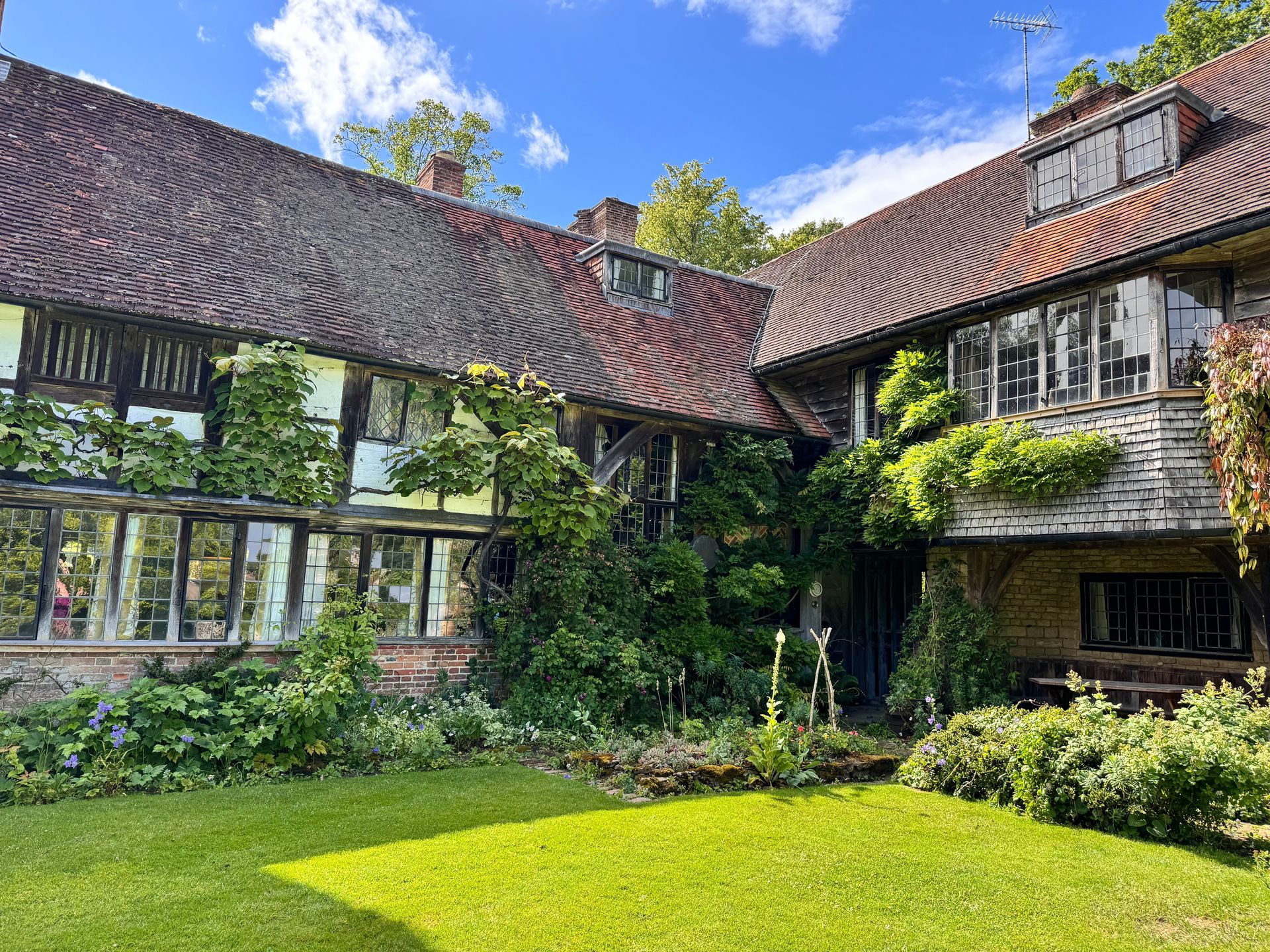
Voysey’s assistant, Tom Muntzer, the son of Voysey’s builder, was tasked with designing the extension. His solution was both practical and sensitive: four new blocks arranged around an inner courtyard, extending from the original house.
The scale of this addition reflected the school’s rapid growth. As the
Clifton and Redland Free Press
noted in 1908:
“When her [Julia’s] school opened in 1902 it boasted one boarder and five day girls; now it numbers eighty boarders.”
Growth has continued ever since. By 1911, the school comprised 127 rooms. Later additions, including a music school, classrooms, a sports hall and a headteacher’s house, mark each phase of its evolution.
And yet, this evolution has never been straightforward. As a Grade II listed building, Prior’s Field sits at the intersection of preservation and practicality, an enduring example of the delicate balance between design integrity and modern use.
The Beauty of Original Detail
What makes Prior’s Field so compelling is not just its history, but the survival of its original character.
There is an inherent tension in caring for historic features within a working school, especially in a listed building. It is, at times, both a blessing and a challenge. And yet, here, the two have been thoughtfully reconciled.
The former dining room remains oak-panelled, its concave fireplace framed by Wrecclesham green tiles and a pillared surround. The staircase features Voysey’s characteristic slender uprights, alongside delicate bird motifs set into the air vents.
Upstairs, bay-windowed rooms, originally bedrooms, still retain their modesty panels, a subtle reminder of their domestic origins.
Even the building’s evolution tells a story. A corridor that once ran open along the quadrangle was enclosed and glazed by 1916. The library, dedicated to Ethel Ann Burton Brown, the school’s second headmistress, was later refitted in 1928 by Russells and Sons of Broadway, renowned Arts and Crafts furniture designers.

Slide title
The original house plab by Voysey, 1900
Button


Slide title
The Oak Hall, and original dining hall
Button


Slide title
The library dedicated to the second head, Ethel Ann Burton Brown
Button
An Unconventional Plan
Voysey’s design is quietly subversive.
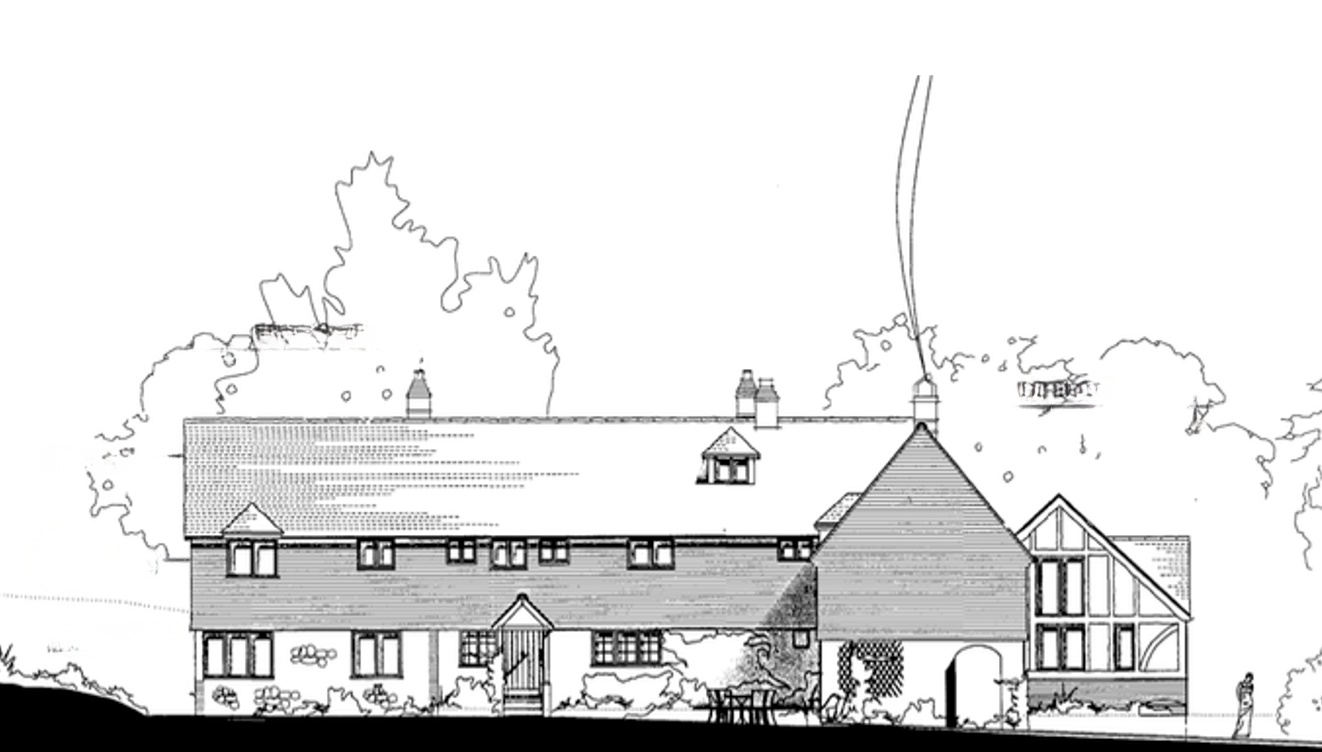
The south elevation appears symmetrical, suggesting a formal entrance, but there is no front door. Visitors were instead intended to approach from the north, where the entrance sits off-centre.
Later alterations complicated this further. A perpendicular extension obscured the original doorway by introducing a new entrance at a 45-degree angle, creating a plan that feels, at times, unresolved.
One room in particular captures this ambiguity: a space with extensive glazing, including an arched glass ceiling vault that extends into the porch. Now reminiscent of a “goldfish bowl”, it was originally the prefects’ room, its transparency offering a subtle means of supervision.
It is an imperfect solution, but a fascinating one. A reminder that buildings evolve, often in ways their original architect never intended.
What This Teaches Us About Our Homes
There are clear lessons here for how we design today.
Arts and Crafts interiors prioritised:
- Built-in furniture
- Honest materials
- Craftsmanship over trend
- A deep connection to the surrounding landscape
- Thoughtful, human-centred planning
- Attention to detail
These principles remain as relevant now as they were in Voysey’s time.
And yet, many modern renovations move in the opposite direction, adding complexity, overlooking flow and losing sight of architectural integrity.
We often add more, but achieve less.
Prior’s Field offers a different perspective: that good design is not about accumulation, but about clarity.
A Living Legacy
Today, Prior’s Field remains a thriving independent school for girls. Despite its many adaptations, it still stands as a significant example of early 20th-century domestic architecture, one that continues to function, evolve and inspire.
Even its identity reflects this balance between past and present. The original school badge, designed by Voysey, featured a stylised heart and a bird of wisdom perched in an olive tree. Its recent reinterpretation focuses on the bird itself, “a modern take on our cherished heritage. The ‘Bird of Wisdom’ takes flight into the future, symbolising our commitment to growth, evolution, and embracing the modern world”.
It is a fitting metaphor for the building itself.
Perhaps the final word belongs to Sir Julian Huxley, Julia’s eldest son, who described the school as:
“…an oasis where the arts and the humanities are cultivated, as well as science and the practical activities, where nature can be enjoyed, where the individual and individuality matter…”
He could just as easily have been describing the ideals of the Arts and Crafts movement.
Or, indeed, the kind of homes we still aspire to create today.

Slide title
Write your caption here
Button


Slide title
Write your caption here
Button


Slide title
Write your caption here
Button


Slide title
The original Voysey elevations, 1900
Button


Slide title
Prizes in the original Prefects' room
Button


Slide title
Write your caption here
Button
The Influence of Environment
A Cultural Footprint
Prior’s Field School has long attracted a culturally influential community.
Early pupils included Frances Siemens, daughter of industrialist Alexander Siemens; Mary Conan Doyle, daughter of Sir Arthur Conan Doyle; and Eleanor Giedgud, sister of Sir John Gielgud, who attended a boys’ prep school in Godalming.
Ruth Turner, who attended the school in 1909, was the daughter of Arts & Crafts architect Hugh Thackeray Turner, secretary and fellow of the Society of the Preservation of Ancient Buildings. Ruth married Charterhouse master and climber, George Leigh Mallory, who perished climbing Everest.
The alumni also include Enid Bagnold, who wrote National Velvet. Her great-granddaughter is Samantha Cameron, the wife of former Prime Minister, David Cameron. Success extends right through the century with Old Girl actor Victoria Hamilton.
These names are not incidental. They reflect a school, and a setting, that has consistently nurtured creativity, ambition and independent thought.
Your Thoughts
What do you love about the Arts & Crafts period? We'd love to know.
Or are you about to start a renovation, and are looking to include good design and craftsmanship, but don't know where to start? How will your design connect with the landscape and create a new narrative?
Drop us a line. We'd love to hear from you.